
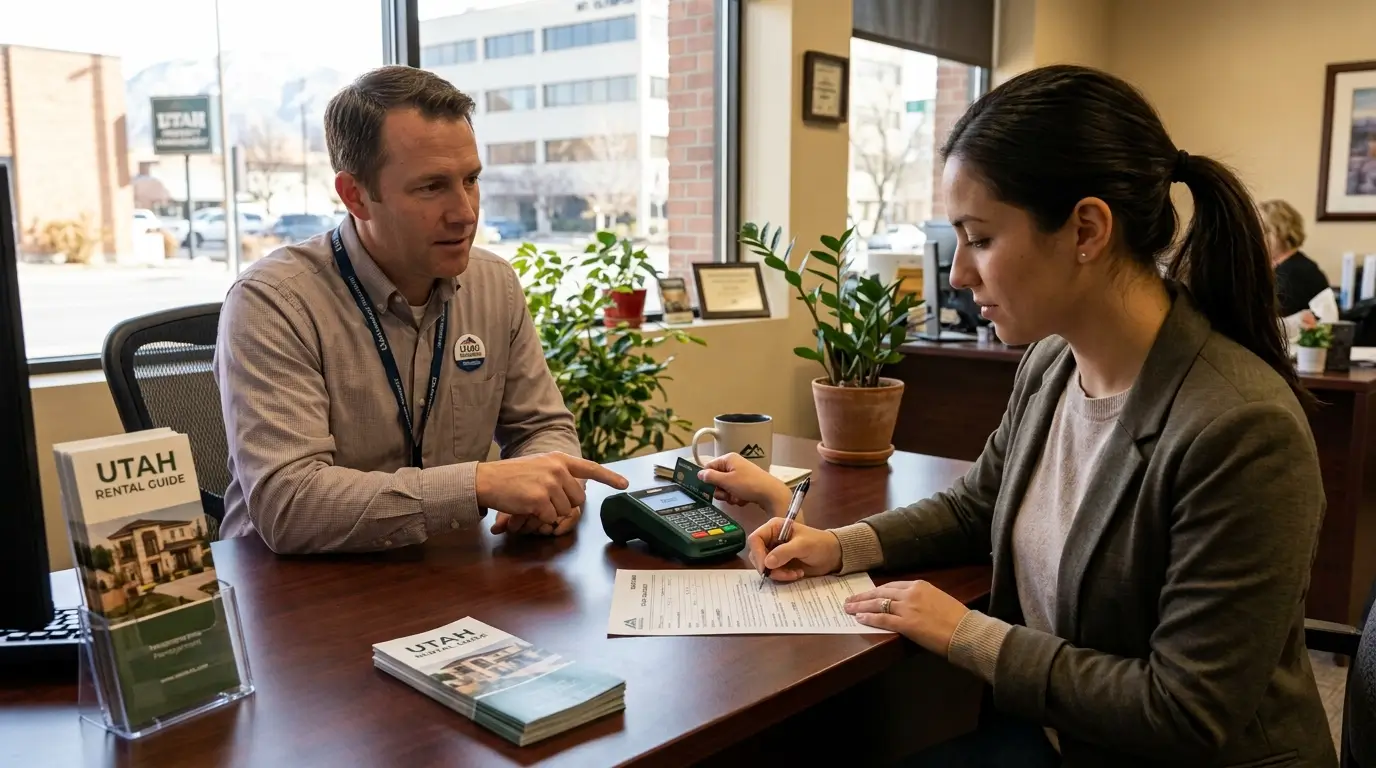
Collecting an application fee used to be one of the simplest parts of leasing a property in Utah. As of May 2025, it comes with a legal prerequisite that a lot of landlords still haven't built into their process: a written disclosure has to go out before any money changes hands, not after. Given how routine application fees have always felt, this is exactly the kind of requirement that's easy to overlook until a disputed fee turns into a real problem.
Key Takeaways
Utah's HB 182 requires a written disclosure before a landlord collects any payment from a prospective tenant, including application fees.
That disclosure has to include a good-faith rent estimate, all fixed and use-based fees, the unit's availability date, and the screening criteria applicants will be evaluated against.
Buildings with four or more units carry an added requirement: disclosing screening criteria and giving denied applicants a specific reason, not a generic rejection.
The disclosure also has to address what happens if the final lease terms end up different from what was originally disclosed.
The same 2025 legislative session added a 60-day notice requirement for rent increases over 10% and a statewide cap on late fees.
What Has to Be Disclosed Before Any Money Changes Hands
Codified within Utah Code Section 57-22-4, HB 182 requires landlords to provide a written disclosure before collecting a single dollar from a prospective tenant, application fees included. That disclosure has to cover a good-faith estimate of the rent, a breakdown of fixed and use-based fees not already folded into that rent figure, the date the unit will actually be available, and the eligibility or screening criteria an applicant will be measured against. The idea behind the law is straightforward: an applicant should know the real cost and the real qualification bar before paying anything, not discover either one after the fee has already been collected.
The Extra Layer for Larger Rental Communities
Most of HB 182's core disclosure requirement applies broadly, but owners of larger rental communities face an additional layer. Buildings with four or more units have to disclose their screening criteria and, when an applicant is denied, provide a specific reason for that denial rather than a generic pass or fail response.
If any part of your Ogden or Salt Lake City-area portfolio includes a property that crosses that four-unit line, it's worth checking whether your current denial process actually documents a specific reason for each rejection, since a vague or undocumented denial doesn't satisfy this requirement. This is a meaningful shift for owners used to a simple approved-or-denied notification, and it means keeping a written record of the actual basis for each decision rather than relying on memory if the matter is ever questioned later.
Don't Forget the Refund Terms
One piece of this law that's easy to overlook is the refund terms requirement. If the final lease ends up differing from what was originally disclosed, whether the rent changed, a fee wasn't listed, or availability shifted, the disclosure has to address what happens to any payment the applicant already made.
Leaving this detail out entirely, or relying on generic leasing software language that doesn't actually match your specific process, is one of the more common gaps we've seen in lease paperwork that predates this law. It's also worth coordinating this with whoever handles your marketing and listing descriptions, since the figures quoted in an ad need to match the disclosure exactly, not just come close.
Two Related Changes From the Same Law
HB 182 wasn't a standalone change. The same May 7, 2025 effective date brought two other adjustments worth building into your process at the same time.
Rent increases exceeding 10% now require 60 days' notice, giving tenants more runway than the standard 30-day notice covers for a smaller increase.
Late fees are also capped statewide at the greater of $75 or 10% of the periodic rent, which closes off older lease language that left more room for open-ended late fee amounts.
Reviewing your rent increase notice templates and late fee clauses alongside your application disclosure process makes sense, since all three changes landed on the same date and touch overlapping parts of a lease.
Building This Into Your Applicant Process
The practical fix here is procedural, not complicated. Every listing, application portal, and pre-qualification conversation needs to route through a written disclosure before any fee is collected, and that disclosure needs to actually match what ends up in the final lease. Keeping a dated copy of every disclosure on file protects you if a dispute ever comes up, since the entire law is built around documentation and transparency rather than a specific dollar penalty. Strong tenant screening starts with getting this sequence right, since an applicant who receives a clear, upfront disclosure is also less likely to dispute the process later.
FAQ
Does this disclosure requirement apply to every rental property, or just larger buildings?
The core disclosure requirement applies broadly to any landlord collecting payment from a prospective tenant. The added screening criteria and specific denial reason requirements apply specifically to buildings with four or more units.
What exactly needs to be included in the written disclosure?
A good-faith rent estimate, all fixed and use-based fees not already included in that estimate, the unit's availability date, and the screening or eligibility criteria applicants will be evaluated against.
What if the lease I sign ends up different from what was originally disclosed?
The disclosure itself has to address what happens to any payment already collected if the final terms differ from what was disclosed upfront, so this needs to be built into the disclosure language directly.
Did anything else change around the same time as HB 182?
Yes. The same effective date introduced a 60-day notice requirement for rent increases over 10% and a statewide cap on late fees of the greater of $75 or 10% of rent.
Getting Your Leasing Process Aligned With Current Law
HB 182 changed the order of operations for every Utah rental: disclosure now comes before payment, not after. Reviewing your listings, application portals, and lease templates against this requirement now avoids a compliance gap that's easy to overlook until a disputed fee forces the issue.
Take a look at our property management services if you'd like a hand reviewing your current application process before your next listing goes live.